
2026 Food Trends to Save Time and Money
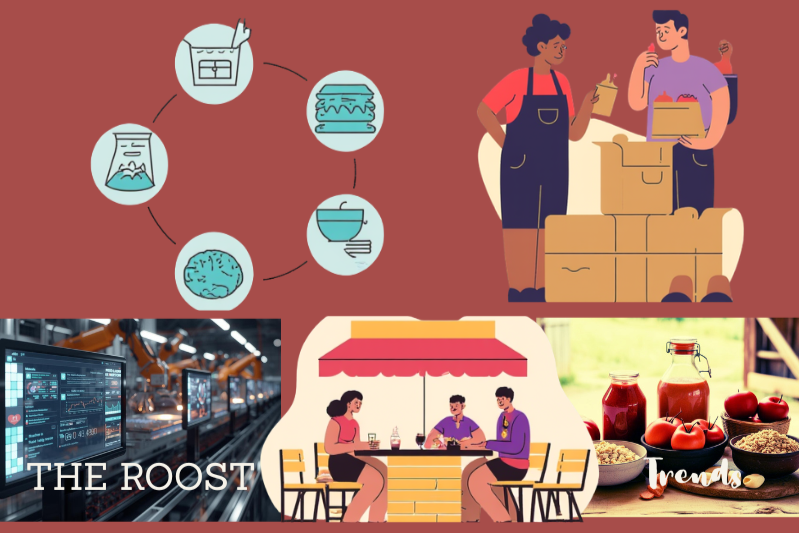
2026 food trends
I am not affiliated with any brands and products that I share in this post. I am an independent researcher sharing my knowledge to help consumers shop their values. Where stated I have personally tried and recommend brands or products. I’m always hopeful to receive feedback from the community about your experiences.
Are you discontent with your eating habits?
Consider this: consistent small improvements create BIG changes over time. A new year brings new opportunity. If you’re following our advice from 2025 then you’re already ahead of the game as food prices continue to rise in 2026.
The Canadian consumer food price index has increased from its 3-year low in spring 2024. In Alberta, food purchased from stores is more expensive than a year ago and even five years ago: food prices in December 2025 were up 5.3% from December 2024 and up 23.9% from 5 years ago in December (2021). That said, we can see food prices in Alberta in December 2025 increased more than the national average (up 5.0%) compared to December 2024, but slightly less from the national average compared to December 2021 (up 24.3%).[i] Food prices are forecast to increase further in 2026.[ii]
Despite anticipated overall higher costs for food, your food spend this year could fluctuate a lot depending on the trends you follow and the habits you make. Choose now to review your eating habits for your health and wealth!
The Elephant in Your Fridge is Getting Bigger: Higher Food Prices in 2026
Canada’s Food Price Report 2026 forecasts food prices up 4-6% in 2026 (p.35). [iii] It is another year when we’re still not exactly clear what potential tariffs will be 6 months or even 1 month ahead. Annual food prices haven’t declined in the last decade and have actually increased above target inflation (+1-2%) 8 times out of 10.
Tired solutions like cutting coupons, switching grocers, buying bulk and scratch cooking are not always realistic. Today we have barriers like trade wars, market concentration, food deserts, and single person households. The elephant in your fridge, i.e., higher food prices, grows with input from a matrix of production costs, availability, demand, transportation, taxes, trade, competition, competitive advantage, and more recently, politics. So what can one citizen really do?
Don’t feel helpless, that’s for sure. There are some strategies you can use to save time and money on food in 2026, if you know the trends. Read on to our time and money saving takeaways
Contents
Transparency and consumer trust
Takeaway: Enhanced traceability can lead to savings!
Personalized AI and tech enabled shopping
Takeaway: No fear about tech here. Use innovations in Artificial Intelligence and online tech for time savings.
Takeaway: Check your eligibility for Groceries and Essentials Benefit and make sure your information is up to date.
Takeaway: Get more bang for your buck..
Takeaway: Take and make at home trendy ingredients that may help lower your food costs.
Save money and time while improving your eating habits? Seriously! It really isn’t hard if you know where to look..
2026 Food Trends and Takeaways
Transparency and consumer trust
Canadian consumers generally trust food safety but struggle with transparency in food production. In 2025 that shifted “in the right direction” as the Canadian Centre for Food Integrity Public Trust Research reported, with confidence spiking to record highs. Potential drivers? Intense public attention on the food system as our biggest trading partner is dusting off its 18th Century economic playbook for mercantilism. Further into 2025 food safety concerns at Alberta daycares underscore the need for vigilant transparency efforts. More Canadians now trust the voice of scientists to be transparent more so than any other stakeholder. Grocery stores, restaurants and food manufacturers lag behind with NGOs, politicians and brands. The report showed consumers now expect increasing transparency and a credible voice to deliver it.
Even in the information age, a “communication gap between food production and consumers” is a transparency barrier greater than the physical distance between the farm and the city.[iv] A snapshot of transparency issues remaining out of focus for consumers today includes country of origin claims, such as “maple washing” (p.12),[v] slaughter practice reporting, and sustainability certifications. Many transparency issues can be solved with traceability. Traceability refers to the ability to track the movement of food through the supply chain.[vi] It may ultimately lead to lower food prices for consumers.
Enhanced traceability regulations in both the US and Canada have been stalled for years. The US Food and Drug Administration Food Traceability Final Rule and updates to Canada’s Traceability Regulations have been put on hold citing a need for enhanced consultation with industry. Whatever barriers to progress may exist, new technologies have made enhancing traceability a beneficial option for increasing transparency. The momentum toward more transparency is in play and a key element for consumer trust in 2026.
Time and money saving takeaway: Consumers could expect to see lower food prices with enhanced traceability because: recalls can become more precise with less food wasted, we may see more stable prices as food supply shocks are mitigated from precise recalls and faster outbreak resolution. There may also be lower compliance and insurance costs for businesses which should be passed on to the consumer.
Personalized AI and tech-enabled shopping
Artificial intelligence (AI) consistently shows up in trend lists, suggesting, as did Bank of Canada Governor, Tiff Macklem, that AI is less of a trend, and more of a structural change to the economy. Companies are benefiting. Perhaps it’s time you do too. There are two easy ways to begin using technology to save you time and money: personalized AI tools and shopping assistants, and personalized grocery e-commerce.
First, save time. Type, “create a healthy grocery list for 7 days for a family of 4 in Canada utilizing principles in Canada's food guide” into a personalized AI tool like Chat GPT, Perplexity or Gemini. In less than 60 seconds, I had a PDF printable grocery list, customized for my grocery store, and a meal prep plan that could ensure I had a week’s worth of food prepped for my family in 4 hours. In four hours and one minute, plus the time it takes to shop, I had meals done for the week. Can you say that about your current habits?
Additionally, you can use personalized shopping assistants like Amazon’s Rufus, or Klarna’s mobile app to compare thousands of products and prices.
Use e-commerce where available to click and collect groceries at no extra charge. The first few lists may take you some time to create (but still less than aisle shopping). Once you have your lists made, repeating orders (e.g. milk) each week becomes as fast as Secretariat (you know…the champion American racehorse!). I use Walmart’s click and collect program because it is the only one available in my area. It’s not perfect, but it is getting better.
Time and money saving takeaway: Tech tools help create a pattern, not perfection. Sometimes it’s just about getting something in the fridge and on the table. They are there for the assist, like the Messier to your Gretzky.
Be aware, however, that there are trade-offs. While grocery pick-up is free within certain time frames, delivery often is not. Furthermore, you’re not going to be able to benefit from the scanner price accuracy code. If you have any bad behaviours (that is, if you’re a chocaholic like me), you’re going to want to watch out for how easy it is to automate your purchase of foods that should be consumed in moderation.
Food insecurity increasing
According to Proof, 2024 (latest available data) marked the “the third consecutive increase in the percentage of people living in food-insecure households and another record high level” in Canada.[vii] Despite the price of food and housing increasing well above target inflation for the last several years, policy makers have seemingly been no better than Marie Antoinette on dealing with the issue of hunger.
Sadly, Alberta has the highest rate of food insecurity (30.9%) for all persons of any province, followed closely by Saskatchewan, New Brunswick, Newfoundland and Labrador, and Nova Scotia. Alberta also had the highest rate of severely food insecure people (8.7%).[viii] Across Canada, the largest rates of food insecurity are for minors. For this I am ashamed.
Handing out cheques is one of the available policy levers to combat food insecurity in the short-term.[ix] When Alberta did so in 2022, however, it clearly did not address the root causes of food insecurity as it continued to grow in the years following. Therefore, I don’t anticipate that the policy tools announced on January 26, 2026 in Ottawa, including an increase in the Essentials and Groceries Benefit, will have any measurable effect this year. Rising food insecurity will continue to ‘trend’ in 2026 before any longer-term policy tools proposed, such as tax cuts or new strategies, can take effect. I truly hope I’m wrong though, and I can eat my words.
Time and money saving takeaway: Check your eligibility for Groceries and Essentials Benefit and make sure your information is up to date to receive it.
Experience dining
Ipsos reported negative consumer confidence in January 2026[x] compared to the long-term average. During periods of lagging consumer confidence, eating out is one of the first budgetary expenditures to hit the chopping block. Constrained by costs, restaurants that cannot compete on price are propelled to compete on ‘experience.’
Not every dining experience hits the mark (did anyone enjoy eating in the dark, or in their own private bubble?) but there are no shortages of dining experience options to consider. Choose live music venues, Alberta Food Tours, or farm dinners like the winner of the Culinary Tourism Award in Edmonton last year, Bar oa.
If you crave the experience of eating sustainably and ethically sourced food, visit River Café in Calgary or RGE RD in Edmonton. Unlike many sustainability focused restaurants, these two offer ethically raised animal proteins on their menu (because sustainability is not synonymous with plant-based). Since we’re talking trends, it’s worth mentioning there have been rumblings of a shift away from plant-based foods this year and a pivot back to the authentic.
If you have kids take a look at Sweet Pea Café and Playhouse in Edmonton. There adults can enjoy café fare while the kids immerse themselves in the whimsy of the adjacent play area. If you’re both hungry and nostalgic, there are a few McDonalds Playplaces left too. Calgary Playground Review has listed several McDonalds with play places in Southern Alberta. I know from experience there is one additional one at the McDonalds in Brooks, Alberta, and at least one reportedly in Edmonton, at 10375 51 Ave. It’s advisable to call in advance to confirm.
Does anyone have a favourite they can add? Please leave a comment.
Time and Money Saving Takeaway: When you decide to eat out, get a little bang for your buck by combining it with the offer of a unique or personalized experience.
Real food renaissance
I love the real food ‘trend’ because to me, real food is classic – it never goes out of style. It entails a shift toward simple ingredients and flavour profiles that are shaken up with a dash of nouveau wellness and comfort. Unlike other food trends such as juicing, nutrient goo…keto…, the real food trend can become a renaissance that the consumer can sustain in a healthy, balanced diet for years to come.
Apple cider vinegar, maple, pistachio, ginger and turmeric are all on the marquis again this year, featuring a very special guest flavour: butter![xi] For comfort and mental health everything’s better with butter. Cabbage is the new cauliflower, according to Pinterest’s 2026 trend report.[xii] Cabbage is a low calorie, nutrient-rich vegetable that is about to be elevated from simple soups and rolls. I’m looking forward to some fresh ideas for cabbage, especially storage. Is anyone’s fridge big enough to store the behemoths passing for cabbage at grocery today?
Time and money saving takeaway: Retailers can get tricky pricing weighted items. Take cabbage for example. Though today the price per 100 grams may be just $0.21 for green, $0.36 for red and $0.28 for flat at Walmart.ca, you can’t buy a head that’s less than 4 kilos at a time, making the average spend between $4 and $9. At that size it may be easier to store it (and use it) in your weight room than in your fridge. With simple gardening and fermentation skills you can cultivate cabbage in your own garden this summer and keep it on hand year-round. Get an added social bonus if you find people to garden with.
If you find this information helpful, Sign-up for The Roost to have our blog posts delivered directly to your inbox.
Remember, food is energy. Thanks for sharing food news with Ruby Rooster.
Not for commercial use. Copyright Ruby Rooster 2025. Unauthorized use and/or duplication of this material without express and written permission from this site’s author and/or owner is strictly prohibited. Excerpts and links may be used, provided that full and clear credit is given to Ruby Rooster with appropriate and specific direction to the original content.
This article is not legal, medical, health, or financial advice from a registered professional; it is for informational purposes only
[i] Statistics Canada. (January 21, 2025). Consumer Price Index, monthly, not seasonally adjusted. Retrieved February 10, 2025, from https://www150.statcan.gc.ca/t1/tbl1/en/cv.action?pid=1810000401
[ii] Dalhousie University. (2025). Canada’s Food Price Report 2026: 16th Edition. Retrieved January 23, 2026, https://www.dal.ca/sites/agri-food/research/canada-s-food-price-report-2026.html
[iii] Ibid
[iv] Sutherland et al. (2020). Consumer insights on Canada's food safety and food risk assessment system. Journal of Agriculture and Food Research. Retrieved January 29, 2026, from https://www.sciencedirect.com/science/article/pii/S2666154320300193?via%3Dihub
[v] Dalhousie University. (2025). Canada’s Food Price Report 2026: 16th Edition. Retrieved January 23, 2026, https://www.dal.ca/sites/agri-food/research/canada-s-food-price-report-2026.html
[vi] https://inspection.canada.ca/en/food-safety-industry/toolkit-food-businesses/traceability
[vii] https://proof.utoronto.ca/2025/new-data-on-household-food-insecurity-in-2024/
[viii] Statistics Canada. Table 13-10-0835-01 Food insecurity by selected demographic characteristics
DOI: https://doi.org/10.25318/1310083501-eng
[ix] https://proof.utoronto.ca/resource/provincial-policy-levers-to-reduce-household-food-insecurity/
[x] https://www.ipsos.com/en-ca/consumer-confidence-canada-monthly-update
[xi] https://www.kerry.com/insights/kerrydigest/2026/canadian-taste-trends-2026
[xii]https://nationalpost.com/life/food/expected-food-trends-in-2026